
What conversion 'therapy' really is. I should know - I underwent it myself.
In 2014, I travelled to an evangelical Christian 'therapy centre' in Colorado, undercover, posing as an unhappy lesbian who was desperate to reconcile with my parents, and the church. It was horrific.

I wrote this piece shortly after returning from Colorado. I am republishing here in an attempt to educate those that do not appreciate that ‘trans conversion therapy’ simply means talking therapies to help those that suffer from the mental illness of believing they are trapped in the wrong body. It is the polar opposite of actual conversion therapy.
The room where I am sitting is cosy, warm and friendly. There are toys in one corner, shelves full of Christian books, colourful drapes thrown onto the chairs and on the table is a picture of a happy, shiny family: mother, father and two smiling children. The message is clear: this is how we are supposed to live. Heterosexuality equals happiness. Other lifestyles, specifically homosexuality, are not ‘God’s way.’
For this is a Christian counselling centre in small town in Colorado, USA and the therapist, a wholesome-looking forty-something woman named Kelley, seated across the room from me in her own comfy chair, is trying to impress upon me that something traumatic must have happened earlier in my life to have caused me to be who I am: a lesbian.
I am, she believes, broken and unnatural. It is her job, as she sees it, to heal me, to put me back to how God intended me to be: heterosexual.
Kelley specialises in ‘conversion therapy’: converting homosexuals who believe they want to stop having same sex attractions. She is part of a movement that believes that it is possible to change your sexual orientation even if you have, like me, been a lesbian since my teens.
It is a deeply suspect practice and what Kelley doesn’t know is that I am here undercover, to expose it. I have no desire to change my sexuality, if it were possible. I first came out 36 years ago, aged fifteen, and have never regretted it. I have long fought for gay rights and for the legal changes that protect us from discrimination.
While researching material for a book on contemporary lesbian and gay society, I had heard about religious counsellors like Kelley who claim to be able to change a person’s sexual orientation and became interested in how they operate.
Despite being utterly discredited by most psychiatrists, condemned by the British Media Association as harmful, and linked to depression, anxiety and suicides among patients, it is still being practised, both in the US and in the UK, where survey 2009 found that 16 per cent of therapists had attempted it. Some patients are even referred by their GPs.
One of the main providers is Core Issues UK, a Christian ministry based in London, which provides ‘support’ to gay people who seek change in ‘sexual preference and expression.’
There have been attempts to outlaw it in the US, (San Francisco, Minnesota and New York have all banned conversion therapy for those under eighteen), and last year in the UK the Labour MP Geraint Davies published a Private Members’ Bill in Parliament aimed at banning gay-to-straight conversion therapy.
It received support from Labour, Conservative, Liberal Democrat and Plaid Cymru but a ban was dismissed by a Conservative Health Minister as ‘impractical.’
So just how harmful is it? I was determined to find out for myself.
Having written extensively about gay issues in a number of national publications and regularly appearing on TV it would be difficult for me to go undercover in the UK as someone really wanting to change their sexuality.
So I decided to go to the US, where there is a big ‘ex-gay’ movement of people who claim to have been successfully converted, and where people come under intense pressure from Pentecostal and Evangelical churches to ‘convert.’
Gay conversion therapists all belong to the National Association for Research and Therapy of Homosexuality, founded by Joseph Nicolosi, a Catholic therapist.
Nicolosi recommends that gay men wishing to convert men* should participate in sports, avoid activities considered of interest to homosexuals, such as art and opera, and avoid women unless it is for romantic contact.
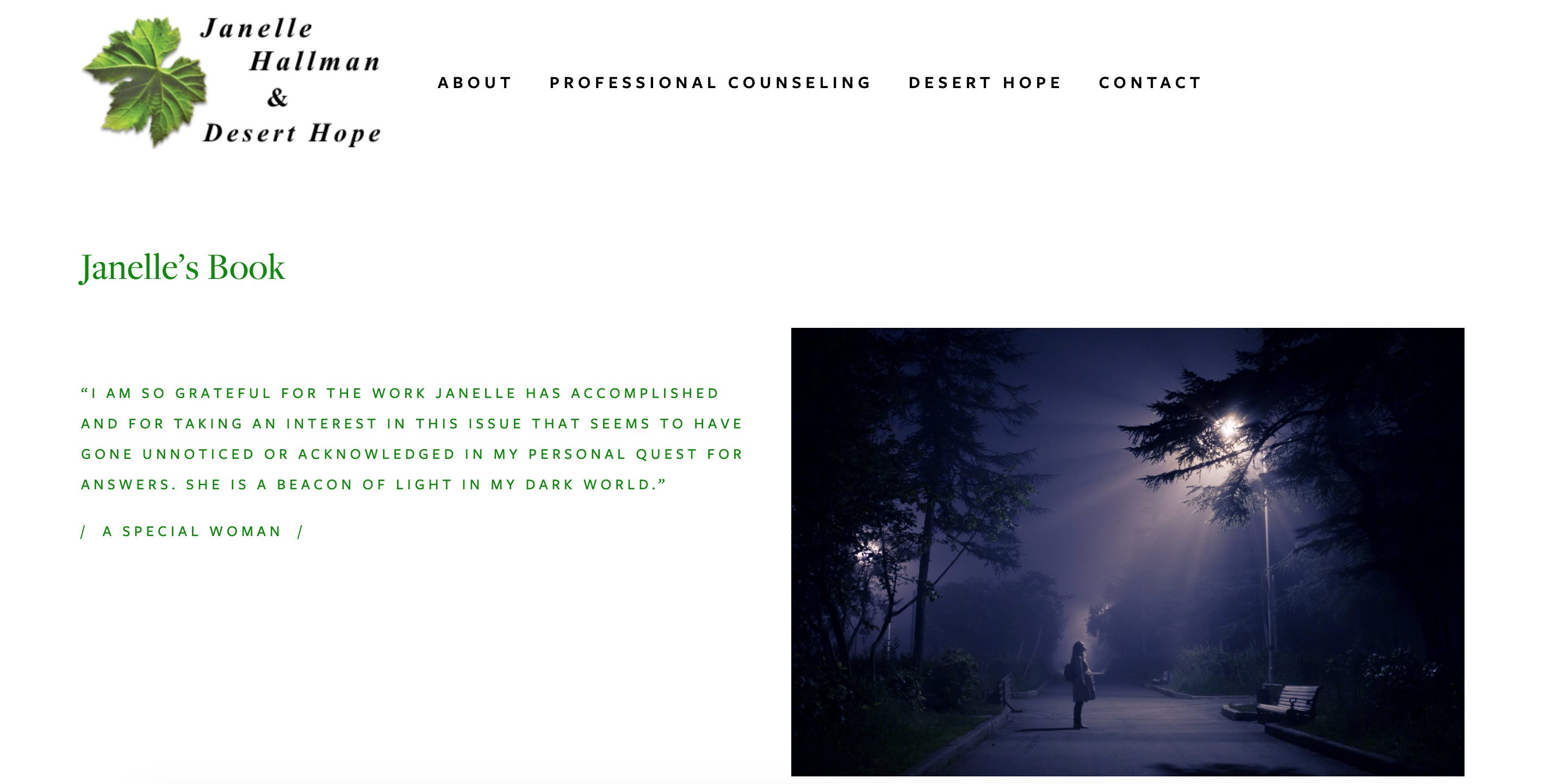
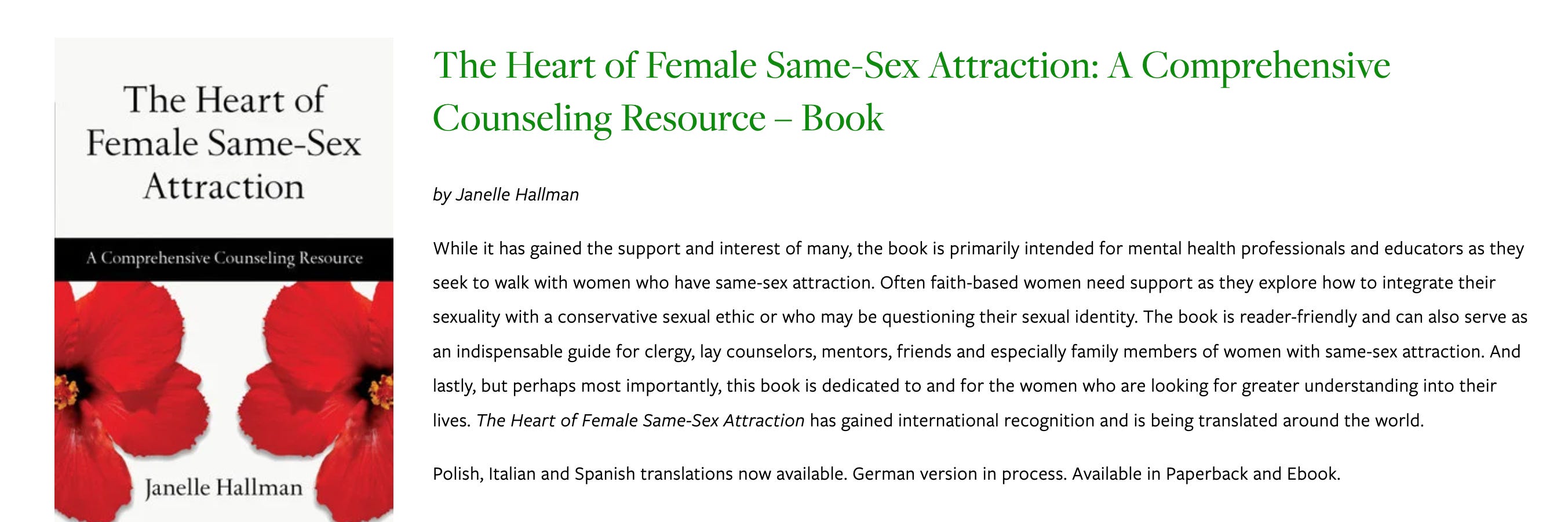
One of the few practices specialising in female conversion in this field is Janelle Hallman & Associates in , Colorado. Janelle is regarded by the ex-gay movement as the expert in female same-sex attraction, having written a book entitled The Heart of Female Same-Sex Attraction.
I contacted them, calling myself ‘Joanna,’ telling them that I was seeking therapy to address my homosexuality and happened to be visiting Denver in a few weeks’ time.
I was told that, prior to the intense one-to-one therapy in Denver, I could have Skype sessions at $125 for 50 minutes. I spoke twice on Skype to Kelley, about my family background and my expectations for change. I told her I wanted to stop being gay and become reconciled with my family and church.
I tell her that when I undertake the conversion therapy I will be cut off from friends and family during what could be a highly traumatic time. She seems blithely unconcerned, despite the website stating that “intensive therapy… is not recommended for any folks who have no local support.’
Before I begin the intensive sessions I get in touch with several survivors of conversion therapy. In Denver I meet Christine Bakke-O’Neil, who runs a campaign called BeyondExGay.com and describes herself as ‘ex ex-gay.’
Christine came out as a lesbian when she went to university. Her fundamentalist Christian family were unsupportive, and her Christian peers rejected her.
Desperate for acceptance and indoctrinated by the ex-gay movement’s slogan, “Change is Possible!” Christine moved to Denver in 1998, to take part in an ex-gay ministry. But after five years of exorcisms in church and reparative [? Same as conversion? ] therapy, Christine accepted she was not going to change. Having met other ‘survivors’ of the ex-gay movement, she came out of the closet once again.
I based my character on Mary, a woman I met some years ago in the UK. She had been rejected by her religious parents and her church when she was discovered as a lesbian in her late teens. For years Mary battled with depression and anxiety as a result of the appalling bigotry she endured.
Desperate to win back the love of her family and God, she sought help to suppress her attraction to women. But after years of failed therapy and misery, Mary finally found a church that welcomed gay congregants and rebuilt her relationship with her parents. She now lives happily with her long-term female partner.
I contacted ‘Annie’ (not her real name) who was brought up within the Pentecostal church and forced to undergo conversion therapy when she was sixteen.
“My parents caught me kissing my best friend in our kitchen. My father, a religious maniac, became violent and told me he would get me ‘fixed’. The next thing I remember was the Pastor was screaming in my face for the Devil to leave me... it took me years to admit to myself that there was nothing wrong with being gay.” Annie left home six months after the attempted exorcism and never saw her parents again.
Some gay exorcisms are even more disturbing. Five years ago a video appeared on Youtube of an evangelical pastor and three church members pressing on the stomach of a teenage boy, with their hands and feet until he begins to vomit, which was taken as a sign that the ‘gay demon’ was leaving him.
Unsurprisingly, people who have undergone such abuse suffer trauma, depression and addictions. There are some ‘success’ stories that the gay conversion movement trumpets, of ‘ex-gays’ who have got married, but these marriages are generally celibate and miserable. They have not been ‘converted,’ but simply made to live a lie. To claim them as ‘successes’ is deeply cynical.
I do not believe that our sexuality is laid down for life before we are born. I believe there is a myriad of circumstances, opportunities, and experiences that can lead us to our sexual orientation. But I do believe our sexual attraction is pretty hard-wired, and should never be decided for anyone by their family or faith.
I am a resilient person, perfectly capable of dealing with anti-gay prejudice, so I feel confident that I can withstand any pressure that Kelley might put on me.
After a cosy chat about my journey, Kelley looks directly at me and tells me that lesbianism is simply a habit I have adopted. “If you have been touched and aroused by someone of the same sex then you say, ‘That’s my arousal pattern’ wherever the tracks have been laid.”
I press Kelley on whether one can be Christian and gay. Her response is ambiguous. “I believe there are many good Christians who are gay, and who are kind of struggling with that very thing.”
On the second day of my therapy that Kelley takes a more aggressive, disturbing approach. My lesbianism, she asserts, is not simply a ‘habit’ but a symptom of childhood trauma.
She starts insisting that I must have been frightened of my father when I was a child, and that I now see all men as scary, hence turning exclusively to women.
Then she suggests that my mother must have neglected me, which has caused me to seek love in women’s arms, looking for what I had missed as an infant, trying to fill the void left by my mother’s lack of love.
As I struggle to contain my anger – I adore my kind, loving mother, and my hard working father, so these accusations are deeply hurtful - Kelley shows me a picture of a baby and asks me why I thought it might cry, stating that babies need three things, “food, movement, and touch,” and that “if mom doesn’t meet baby’s needs, all is not well with the world.”
But, she assures me, this intensive therapy would ‘heal’ me, put me back together and send me back to God. She had, she said, helped many gay people like me who had been rejected by their family and had come to her to be ‘converted’ to heterosexuality.
I keep assuring her that I had a happy, trauma-free childhood. But Kelly doesn’t want to hear it. She keeps returning to the same theme: my homosexuality is not natural, it is a symptom of damage. I must have been traumatised, neglected, even sexually abused as a child.
She can sense in me “a deep sense of shame.” But I am actually burning with fury. How dare Kelley, who has never met my mother, accuse her of neglect?
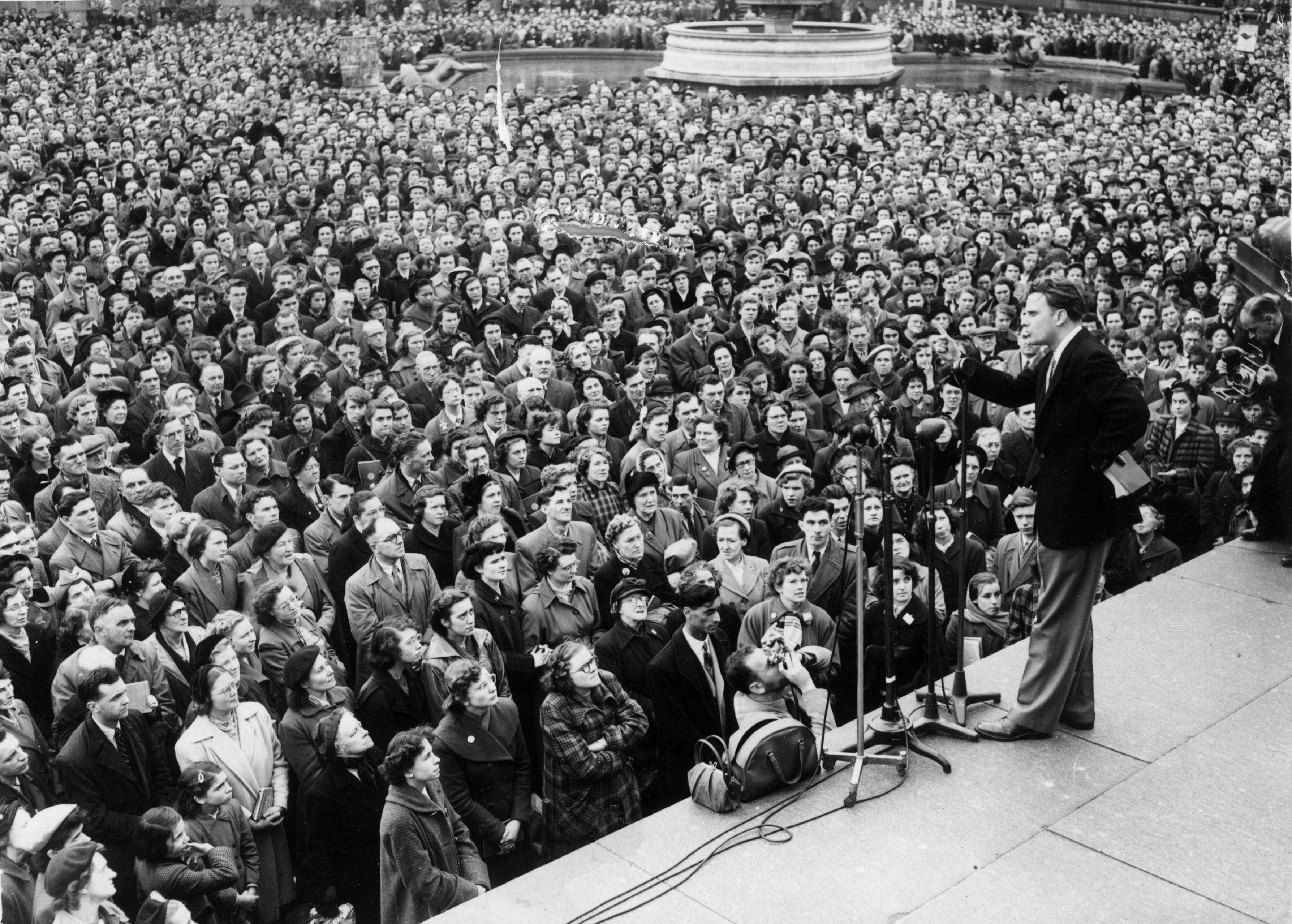
Evangelist Billy Graham in 1954
For all my indignation, the corrosive ‘drip drip drip’ of accusation, is deeply unsettling. When she tells me again and again that I am ‘broken’ and ‘twisted’ I start to feel a sense of despair. Perhaps Kelley is right after all. Am I really twisted and damaged? I can feel my certainty and confidence draining away.
Then Kelly makes me feel even more vulnerable and ‘weird’ by suggesting that I might be a lesbian because I did not have close female friends at school. Yet I made it clear that I was only rejected at school when it was suspected I was a lesbian.
I came out in 1977, aged fifteen. People at school had begun saying that I was a lesbian because didn’t want to go out with boys. It was true: I was only attracted to girls. So one day I simply said: ‘Yes, I am lesbian, so what?’
Immediately girls who had been my friends wanted nothing to do with me. They’d say ‘Let’s not hang out with her, you might catch it.’ I was bullied and ostracised and although I could look after myself, I left school as soon possible.
Telling my mother was hard, but she and my father and two brothers were very accepting. Not everyone was. I lived on a working class estate in the North East of England. People equated homosexuality with child abuse, and I was viewed with suspicion.
So when Kelley keeps telling me that homosexuality goes hand in hand with abuse, the trauma of my teenage coming-out floods back. As part of an exercise I write on a piece of paper ‘I don’t want to be a lesbian anymore,’ and congratulates me when I do it.
At the end of my second day with Kelley I feel exhausted and depressed. I return to my hotel room and seek refuge in a bottle of wine. Far from home and the support of friends, I suffer an anxiety attack, shaking and short of breath from anger and distress.
In the final session, I ask Kelley whether I should access ‘gay affirming’ therapy that would make me feel better about being a lesbian, rather than pursue a route that would end with me losing my identity and support network.
But Kelley is not interested. She does not refer me to any of the UK’s many gay-friendly churches or suggest ‘gay-affirming therapy’ to help me come to terms with my sexuality. She simply keeps insisting that I must be healed.
I return to the UK feeling unsettled, anxious and depressed. Hour after hour of being told I am twisted and damaged have taken their toll. I begin to wonder if Kelley is right: perhaps there really was something ‘broken’ in me that had caused me to go ‘off the rails’ and into lesbianism.
If this is how conversion therapy leaves me, what must it be like for a less confident person who does not have supportive friends and family, who is under pressure from their church and vulnerable to the message that they are damaged.
I get in touch with Kelley by email and reveal my true identity and the real reason I came to see her. She is polite but unrepentant. It would, she says, have been unethical to refer ‘Joanna’ to gay affirming therapist as I had explicitly told her that I wanted to change.
I also received an email from Janelle Hallman, explaining her view that her work helped people who suffered ‘psychological distress’ because of the conflict between their faith and sexual orientation.’
Neither of them seem to grasp that trying to change someone’s sexuality was certain to cause them more psychological harm.
Several weeks on from my trip to Denver, I still feel upset and angry at what Kelley put me through. Their cynical efforts to portray me as abused and twisted were deeply distressing and I weep for the innocent men and women caught up in the pernicious conversion racket.
A tough read.
Being able to glom onto LGB was the Trans movement’s greatest trick, wasn’t it. Muddying the waters that sexuality and gender ideology are the same. Without that parasitism, their movement withers
The tragic irony is that , presumably, many people try gay conversion therapy specifically to reconnect with their religious families. And here is a "therapist" who is doing everything she can to put the blame on parents and burn whatever bridges are still there. Any therapist who starts off by blaming the parents is a dangerous quack and reminds me of the recovered memories scandal.